

David Epstein, D.O. — Experienced Physician, Walsh-Trained
For more than 35 years, Dr. Epstein has worked with patients whose symptoms do not always fit neatly into a standard diagnosis or treatment plan.
His approach combines the Walsh biochemical framework with functional medicine, laboratory testing and expanded methylation assessment. Symptoms, clinical history and laboratory findings are considered together rather than interpreted in isolation, helping identify biochemical patterns that may contribute to persistent mood, behavioral or cognitive symptoms, medication intolerance, or an incomplete response to conventional treatment.
Select the Physician-Reviewed Assessment That Fits the Need
Each option leads to a Second Opinion Physician assessment with physician review. The main differences are the depth of laboratory testing and whether expanded methylation analysis is included. A questionnaire-based option is also available when laboratory testing is not accessible.
Biotype Assessment
Evaluates biochemical patterns associated with undermethylation, overmethylation, copper overload, pyroluria and toxic burden using questionnaire findings, clinical history and relevant laboratory markers.
Biotype + Methylation Assessment
Combines traditional Walsh biotype evaluation with SAM/SAH interpretation and expanded assessment of factors that may increase methylation demand or interfere with methylation efficiency.
Questionnaire-Based Biotype + Methylation Assessment
Designed for international patients and U.S. patients who do not have practical access to the recommended laboratory testing. WalshDoc uses the detailed Biotype + Methylation Questionnaire, clinical history and computerized pattern scoring to identify the biochemical patterns most strongly suggested by the available information.
WalshDoc: From Initial Assessment to Measured Treatment Response
WalshDoc is the assessment, scoring and reporting system developed to support Dr. Epstein's clinical work at Second Opinion Physician. It combines structured questionnaires, laboratory findings and clinical history to help identify biochemical patterns that deserve closer attention.
Its value does not end with the first report. Follow-up questionnaires, repeat laboratory results and changes in supplements, medications, diet and lifestyle can be compared over time. This creates a longitudinal record of what is improving, what is not, and how the treatment plan may need to change.
Five Biochemical Patterns That Can Influence Mood, Behavior and Treatment Response
The Walsh Approach looks beyond a psychiatric diagnosis to identify recurring biochemical patterns that may help explain differences in symptoms, nutrient needs and medication response. Symptoms provide important clues, but laboratory testing is used whenever possible to determine whether the suspected biochemical pattern is actually present.
Learn More About the Walsh Approach →If Undermethylation Is Present, the Next Question Is Why
After many years of applying the Walsh Protocol clinically, assisting with the education of Walsh practitioners and researching methylation physiology, Dr. Epstein developed an expanded framework for evaluating undermethylation. The traditional Walsh model provides an important starting point, including the use of whole-blood histamine as a screening marker. The expanded approach asks an additional question: what factors may be creating or sustaining the undermethylated state?
This is different from simply identifying an MTHFR, COMT or other genetic SNP. Genetic variants may indicate susceptibility, but they do not by themselves show how the methylation pathway is functioning at the time of evaluation. Dr. Epstein therefore combines methylation laboratory findings — frequently using the more detailed Genova methylation panel — with symptoms, health history, diet, lifestyle, environmental exposures and other epigenetic influences.
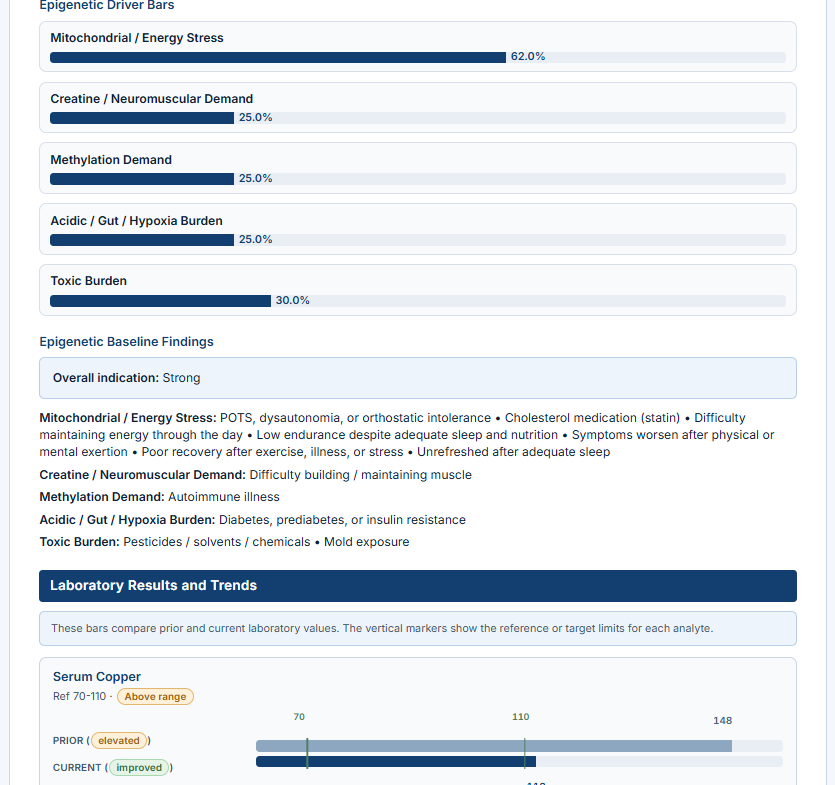
Five Epigenetic Drivers of Undermethylation
These five areas help organize the search for factors that may increase methylation demand, interfere with methylation efficiency or contribute to persistent undermethylation. More than one driver can be present in the same patient.